
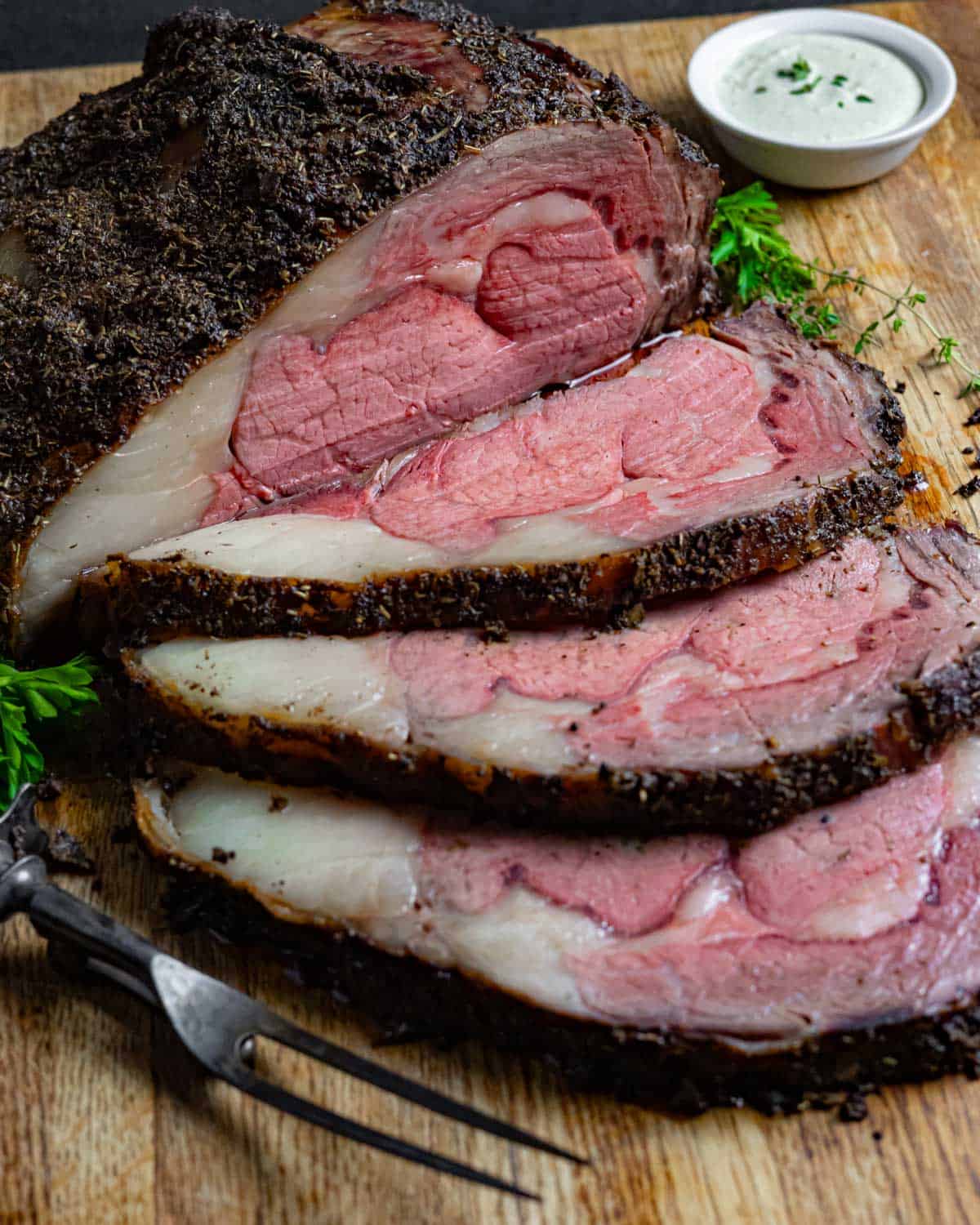
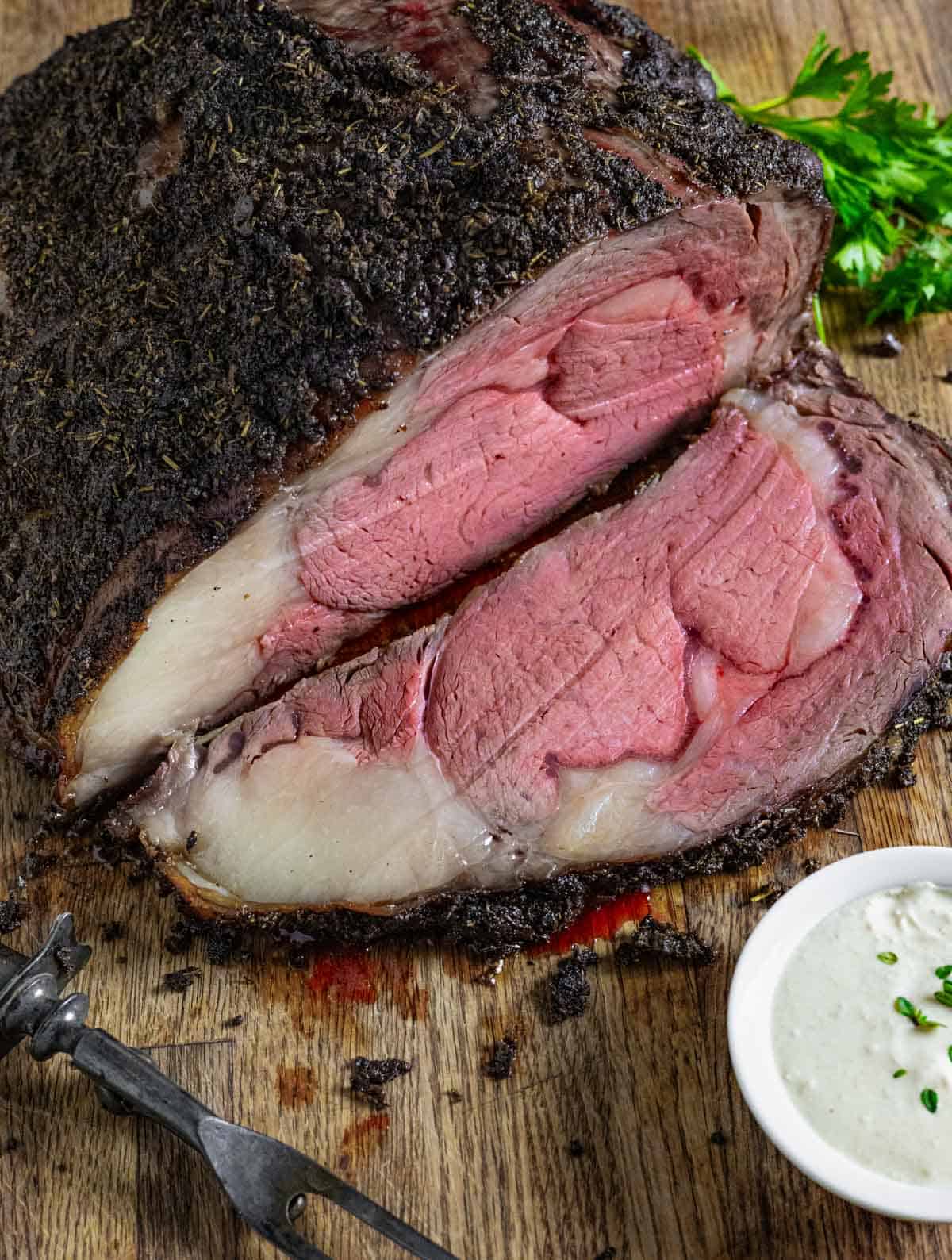
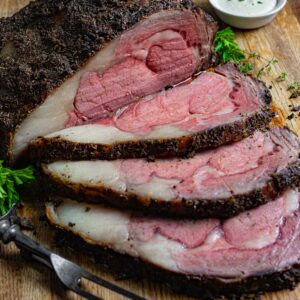
Make the most delicious, juicy and tender Smoked Traeger Prime Rib with these easy to follow, step-by-step instructions. The wood-fired flavor and succulent bark will keep everyone coming back for seconds.
Jump to:
While a traditional oven-roasted prime rib can be the crowning glory of any table, serving a Traeger prime rib smoked to perfection delivers a superior culinary experience, worthy of the finest restaurant. It's one of my favorite smoked beef recipes, alongside tender Smoked Flank Steak and succulent Chuck Roast Burnt Ends.
Why you'll love this recipe
- Superior flavor – low and slow smoking creates a rich, smoky flavor that you can’t get from standard oven roasting
- Succulent bark – the interior of the roast stays moist and tender, while the exterior develops a flavorful exterior crust from seasonings, rendered fat, smoke and a reverse-sear
- Hands-off cooking – this is a very low-maintenance recipe – the smoke does all of the work
- Even cooking – cooking at a low temperature can help the roast cook more evenly compared to high-heat cooking
- Perfect special occasion meal – this roast is a show-stopping centerpiece, perfect for Thanksgiving or Christmas holiday meals
What is prime rib?
This roast is a premium cut of beef that comes from the rib section of cow called the ‘beef primal’, specifically ribs 6-12. It’s known for being one of the most tender, flavorful and well-marbled cuts due to its high amount of intramuscular fat.
It’s also referred to as a standing rib roast because large roasts can be roasted standing on the rib bones. This section is also sliced into steaks before cooking and are sold as ribeye steaks.
Bone-in vs boneless prime rib
Bone-in
- Creates a more dramatic, classic holiday presentation that is a traditional centerpiece roast.
- Can take slightly longer to cook, but may add extra flavor during cooking
- Carving can be a little trickier than a boneless roast, but it has a beautiful, wow-factor presentation
Boneless
- Easier to carve and simpler handling
- Fits better in smaller smokers and can be simpler to handle
- Takes less time to cook
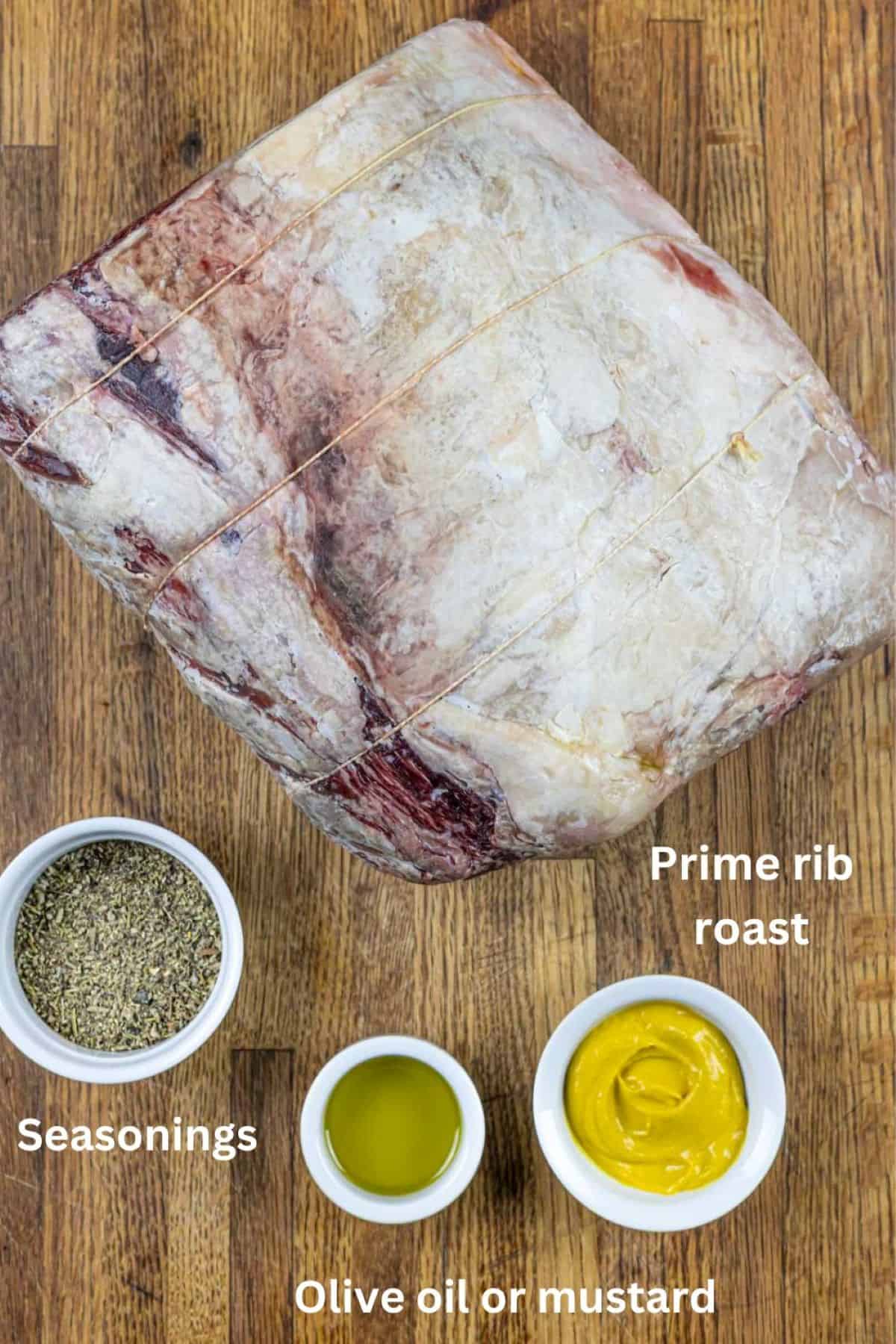
Ingredients
For complete instructions and measurements, see the recipe card, below.
- Prime rib roast – either boneless or bone-in. Smoking times will vary – see below.
- Olive oil or mustard – helps the spices to adhere to the surface for the best bark
- Dry rub – see Prime Rib Rub below for my recommendations
Prime rib rub
Rubs enhance beef’s natural flavors and richness, without overpowering them. Any classic, savory rub that includes rosemary, thyme, salt and pepper are great choices. My favorites are homemade All-Purpose Seasoning and this Beef Rub, that is divine on any cut of beef. Both are perfect for smoking meat and are staples in my pantry.
Avoid sugary or overly spicy rubs, as these tend to mask the meat’s natural flavor.
I recommend a dry brine for beef. Season 12-24 hours before smoking and refrigerate uncovered.
Roasts with bones attached
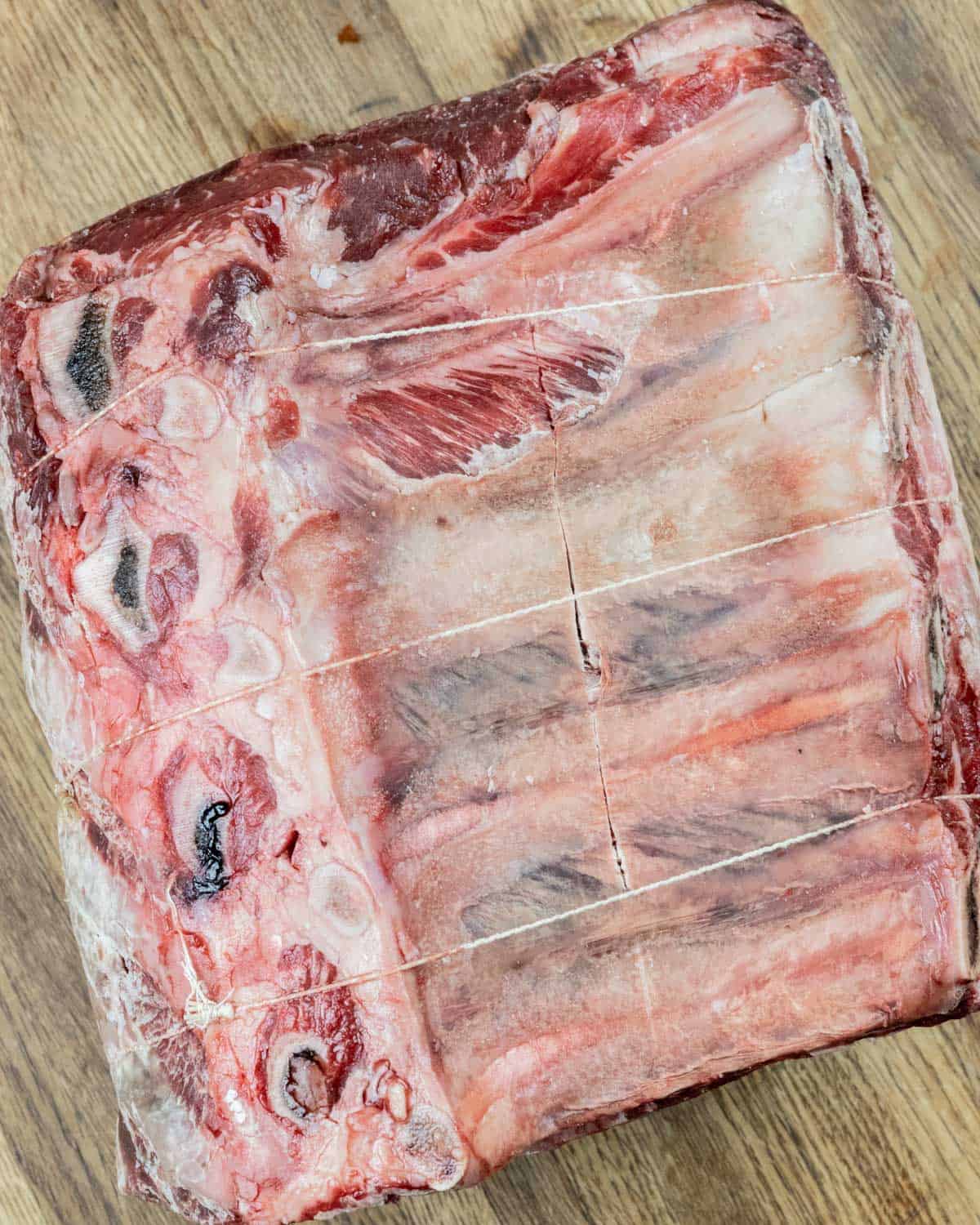
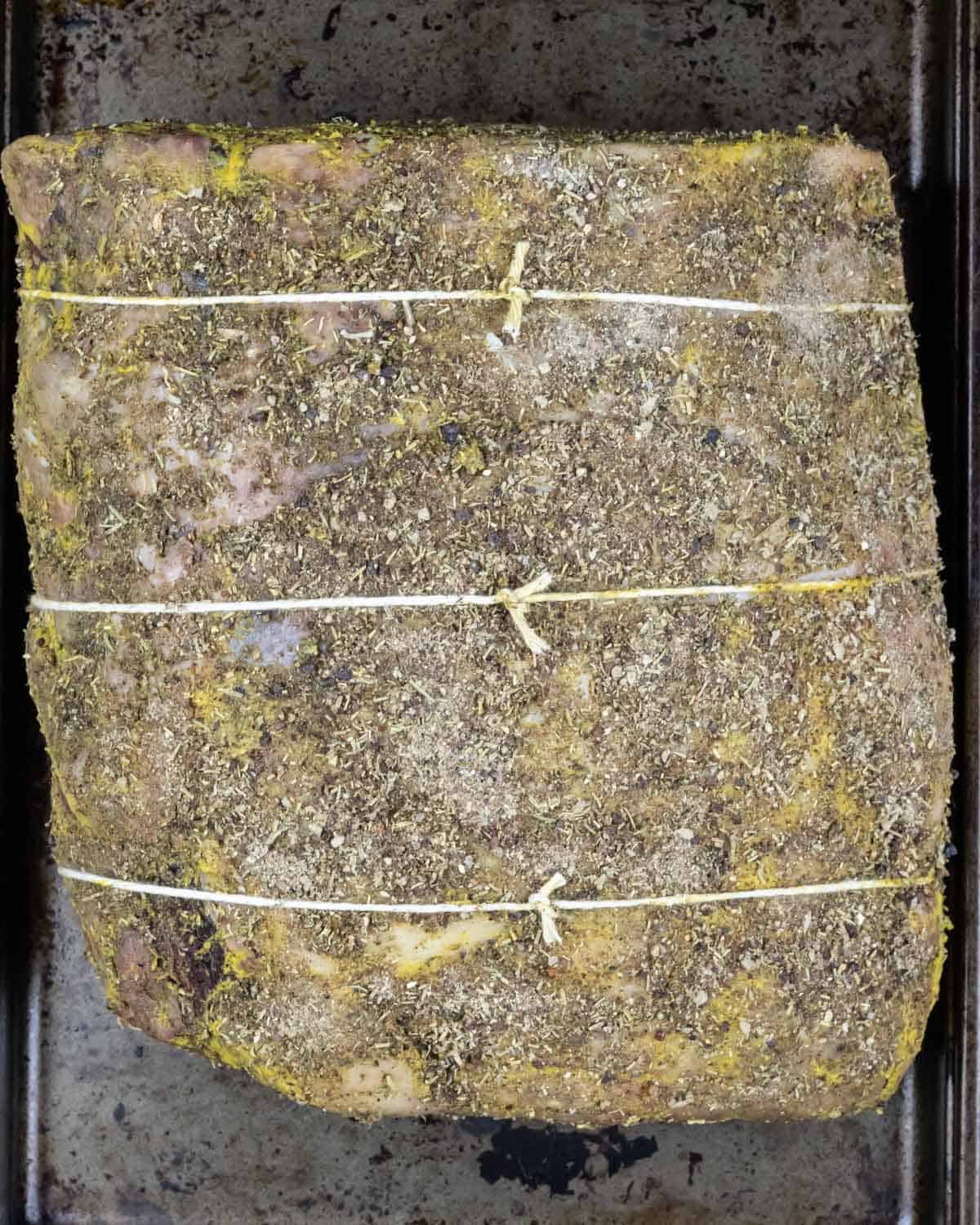
Some roasts are sold with the bones either still attached or simply tied to the bottom of the roast, like the one I use for this recipe. It can be seasoned and smoked either with the bones tied on (as shown in the pictures, above) or the bones can be removed.
Instructions
Pat the surface of the meat dry.
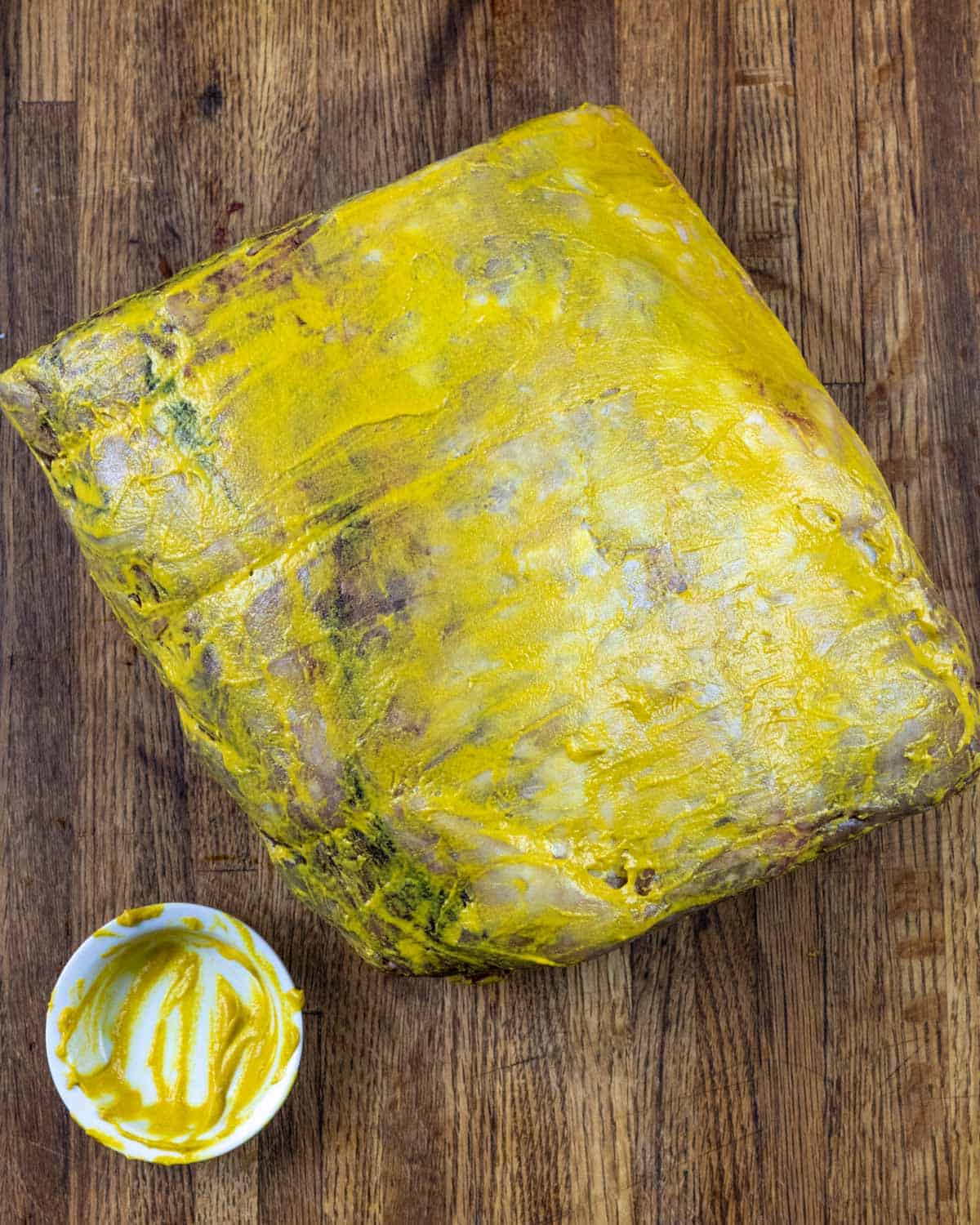
Coat the entire surface of the roast with mustard or olive oil.
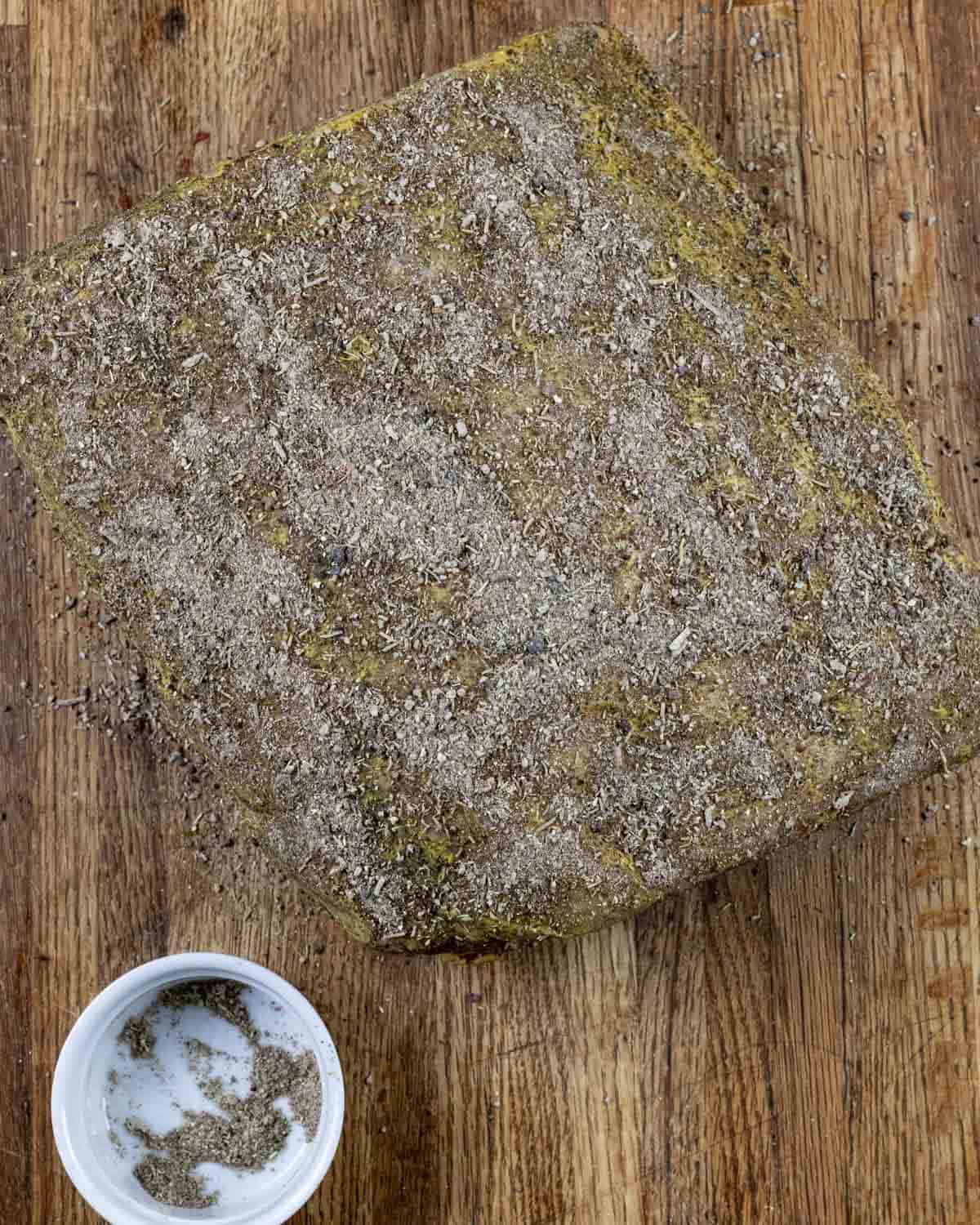
Liberally season with the dry rub.
Let sit uncovered in the refrigerator for up to 24 hours. This dry brining yields the most tender and flavorful meat. If you’re short on time, try to let the rub sit on the meat for at least 2 hours.
Pre-heat the smoker to 225°F.
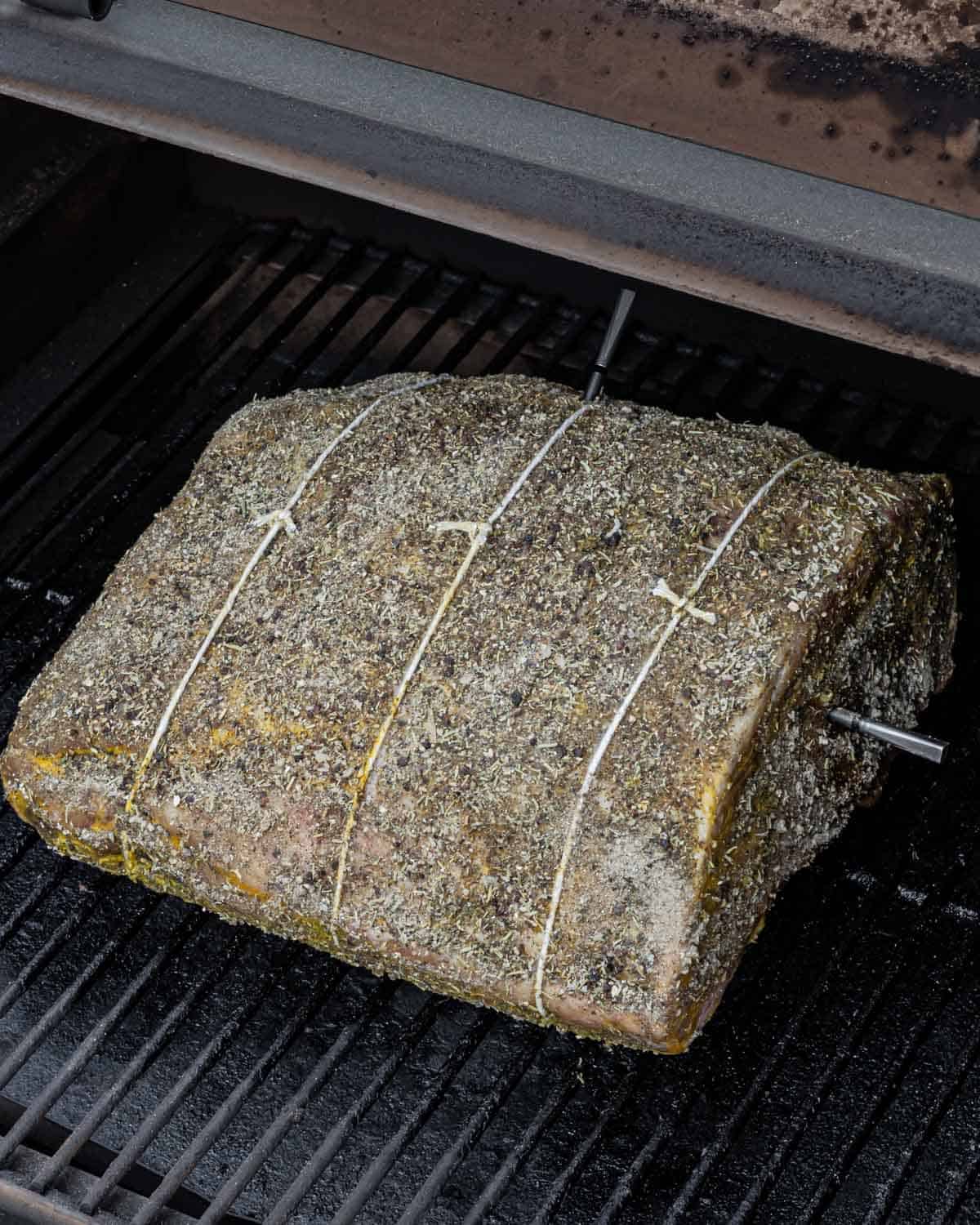
Place the roast on the grill and smoke until the internal temperature reaches 120°F for rare, 125°F for medium-rare or 130°F for medium.
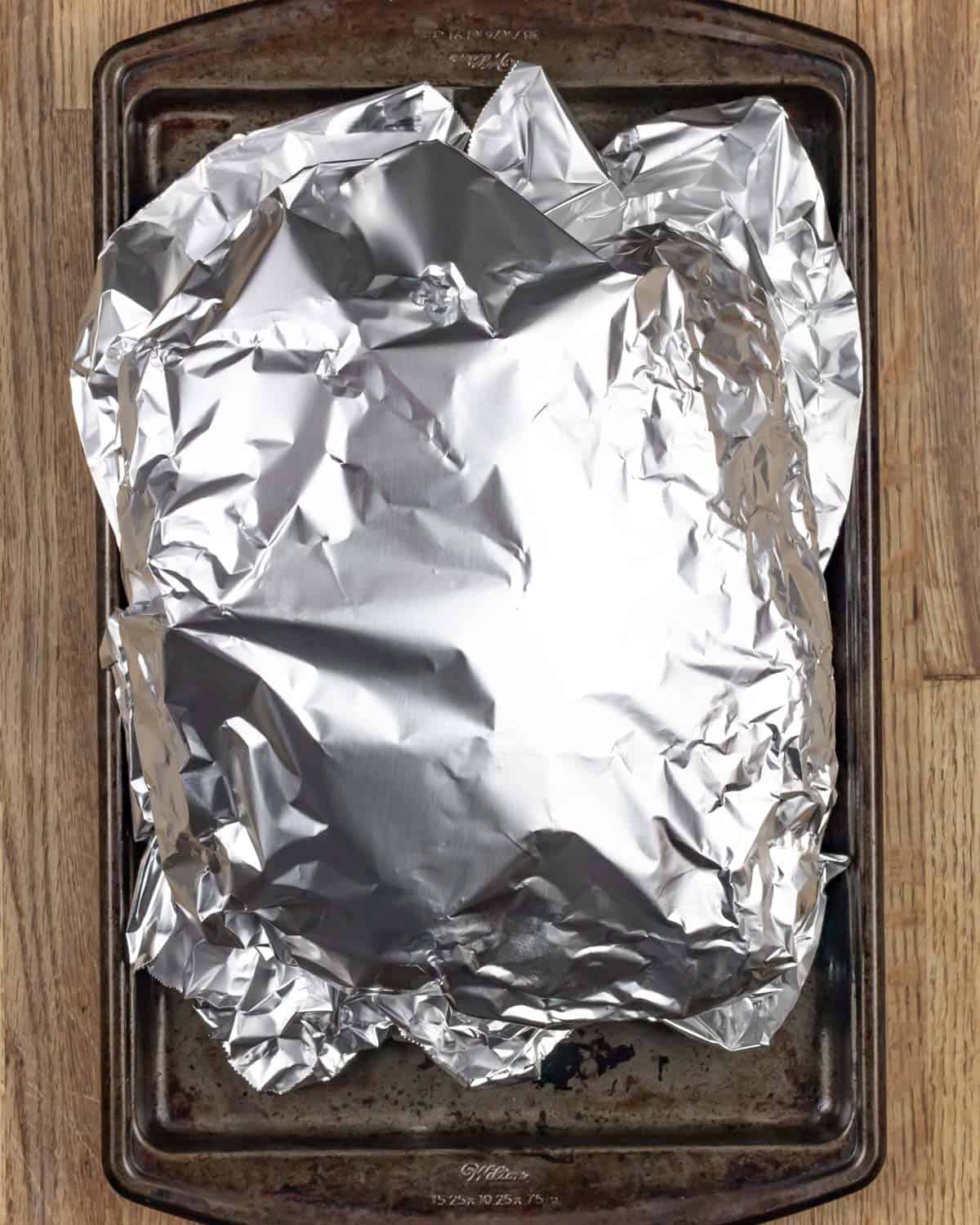
Remove from the grill and place on a cutting board or sheet pan and cover with foil.
- Increase the temperature of the smoker to 400°F.
- Place the roast back on the grill and smoke until the meat reaches your desired level of doneness (see How Long to Smoke Prime Rib, below).
- Remove from the grill and allow the meat to rest for about 15 minutes before carving.
TIP: Consider removing from the refrigerator 30 minutes before putting on the smoker. This allows the meat to begin to warm to room temperature, which may lessen the time on the smoker. Any longer than 30 minutes can put the meat in the temperature danger zone, encouraging bacterial growth.
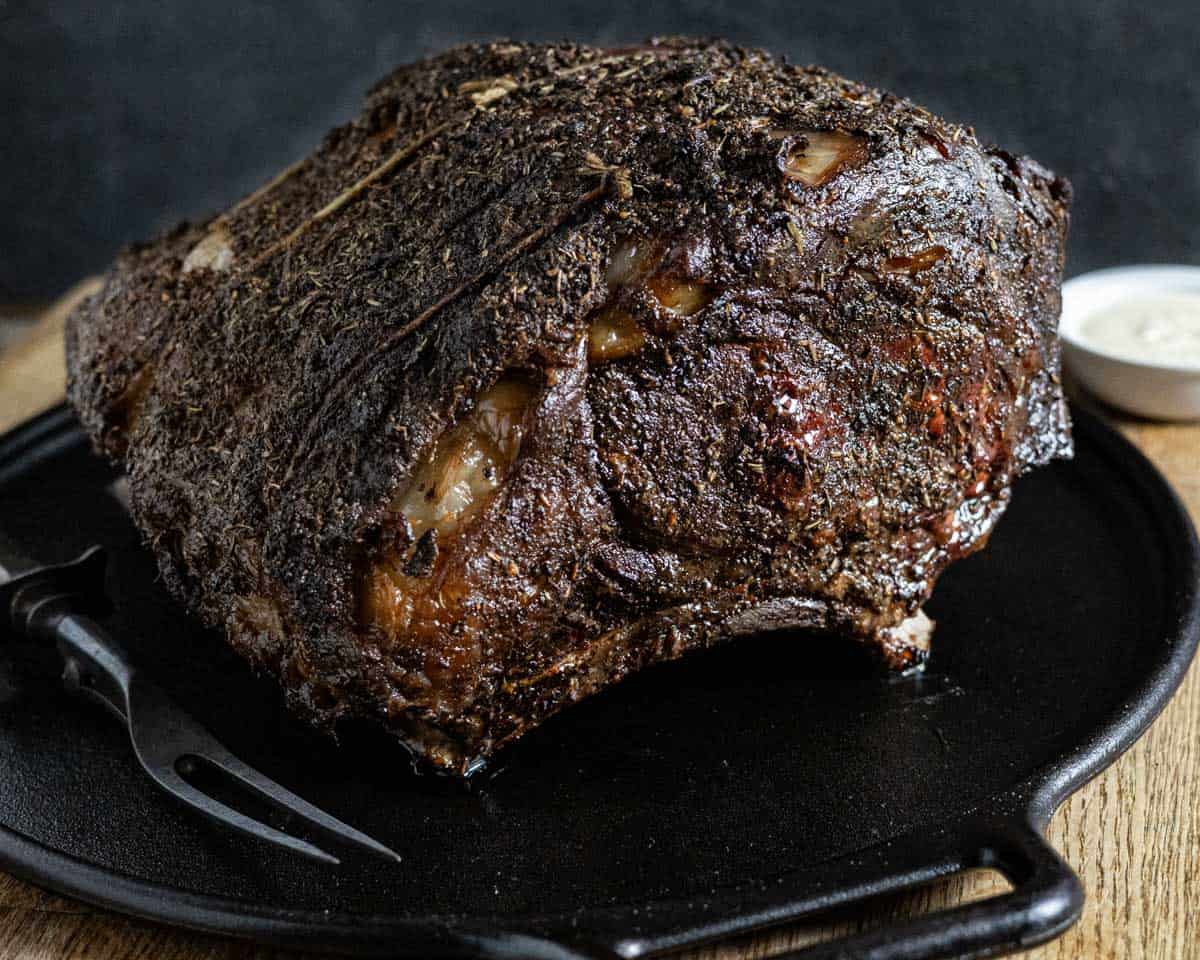
How long to smoke prime rib
Smoke time typically takes about 30-40 minutes per pound at 225°F, but the best guide is internal temperature, not time.
Approximate smoking times:
- 4-5 pound roast: 2-3 hours
- 6-7 pound roast: 3-4 hours
- 7-8 pound roast: 4-5.5 hours
Remove from the smoker when the internal temperature reaches your preferred level of doneness:
- Rare: 120°F-125°F
- Medium-rare: 125°F-130°F (most popular)
- Medium: 135°F-140°F
- Medium-well: 145°F-150°F
- Well-done: 155°F-160°F
Keep in mind, the temperature will rise about 10°F while resting (carryover cooking).
Allow 30 minutes of rest time and an additional 15 minutes for sear time.
How much prime rib per person
Estimating how much to roast per person will depend on if you plan to purchase a bone-in or boneless cut. Boneless roasts will give you more edible meat per pound.
- For a boneless roast, estimate .75 pounds per person
- For a bone-in roast, estimate about 1 pound per person
- If you want leftovers, increase the size of roast you purchase by 1-2 pounds.
How to serve
Slice against the grain for best results. Slicing with the grain can cause the meat to fall apart and it will be difficult to cut. Serve your smoked prime rib with these favorites:
- Horseradish mustard sauce - a hint of heat from horseradish is a perfect match for the richness of prime rib
- Green chimichurri or Red Chimichurri - excellent sauces to pair with any meat
- Rutabaga Puree - smooth, creamy rutabaga is a perfect low-carb side dish
- Maple Rosemary Brussels Sprouts - an essential part of any holiday meal
FAQ
Yes, they are the same cut of meat. A ribeye roast will be sold boneless, where a prime rib roast will be sold either bone-in or boneless.
This comes down to personal preference. Leaving the bones on offers easier meal prep and a more traditional presentation of carving off the bone.
It’s best to cook a prime rib fat side up. As the fat cap renders, it naturally bastes the meat as it cooks and develops a flavorful crust on top. It also protects the meat from drying out, especially when smoking low and slow.
They come from the same cut of meat, but are prepared and served differently. A prime rib is a large roast, cooked whole, while ribeye steaks are slices of prime rib that are cooked hot and fast.
Did you make this recipe? Let me know how you liked it by giving a star rating and leaving a comment!
More favorite smoker recipes
📖 Recipe
Smoked Traeger Prime Rib
Ingredients
- 1 Prime rib roast (boneless or bone-in)
- ¼ cup Prime rib seasoning (I recommend All-Purpose Seasoning or Beef Rub)
- 2 tablespoons yellow mustard (or olive oil)
Instructions
- Pat the surface of the roast dry.
- Coat evenly with mustard or olive oil.
- Liberally season with the dry rub.
- Let sit uncovered in the refrigerator for up to 24 hours. This dry brining yields the most tender and flavorful meat. If you’re short on time, try to let the rub sit on the meat for at least 2 hours.
- Pre-heat the smoker to 225℉.
- Place the roast on the grill and smoke until the internal temperature reaches 120°F for rare, 125°F for medium-rare or 130°F for medium-doneness.
- Remove the roast and place on a cutting board or sheet pan and cover with foil.
- Increase the temperature of the smoker to 400°F.
- Place the roast back on grill and smoke until the meat reaches your desired level of doneness (see How Long to Smoke Prime Rib, above)
- Remove from the grill and allow the meat to rest for about 15 minutes before carving.
Notes
- Horseradish mustard sauce - a hint of heat from horseradish is a perfect match for the richness of prime rib
- Green Chimichurri or Red Chimichurri - excellent sauces to pair with any meat
- Rutabaga Puree - smooth, creamy rutabaga is a perfect low-carb side dish
- Maple Rosemary Brussels Sprouts - an essential part of any holiday meal
Nutrition
*Net carbs = carbohydrates - fiber
Nutritional information is an estimate, calculated using online tools and does not include optional ingredients unless otherwise indicated.
Tracey Hatch-Rizzi says
Ever wonder what to do with leftovers besides the BEST sandwiches? Try leftover prime rib in scrambled eggs, omelettes, burritos, tacos, quesedillas, fajitas or thinly sliced to make the best egg benedict!